
Players use the word “smooth” casually to describe gaming portals that feel good to use. It’s a subjective impression — but it’s created by a specific set of design and technical decisions that either come together correctly or don’t.
A portal that opens slowly doesn’t feel smooth. One where tapping a category takes you through an unnecessary loading screen doesn’t feel smooth. One where the live dealer stream stutters during a bet window, or where the back button behaves unpredictably, or where the chip balance takes a moment to update after a transaction — none of these feel smooth, even if every individual delay is small.
Smoothness is the accumulation of dozens of small decisions made correctly. And it’s more valued by players than most gaming portals seem to realize — because its absence is felt immediately while its presence becomes invisible through habit.
Hitclub is a reward gaming portal that has prioritized this quality deliberately. Similar to how GO88 has built its mobile experience around eliminating friction in the most common player interactions, Hitclub has approached interface design as a product decision rather than a visual one — and the difference shows in how the portal feels across extended daily use.
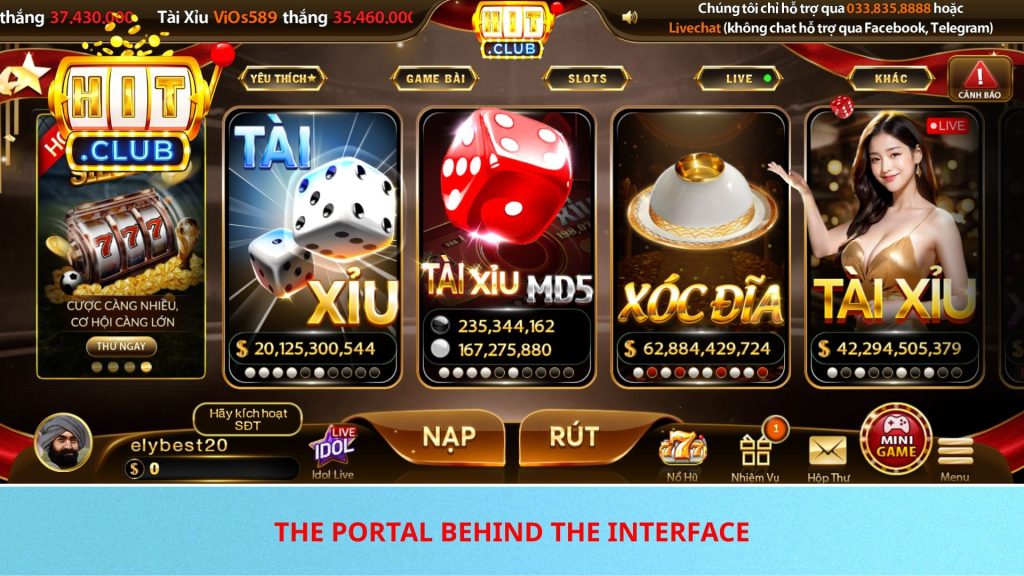
The Portal Behind the Interface
The Hitclub game portal runs 4 game categories: card games (Tiến Lên, Phỏm, Mậu Binh, Poker), jackpot slots with progressive prize mechanics, live dealer tables with real-time streamed sessions, and arcade-style mini games for shorter sessions. Each category places different demands on the interface — and a smooth experience across all 4 requires design decisions tailored to each format rather than a one-size approach.
What Makes the Hitclub Interface Feel Smooth
The Opening Experience — First Impressions Set the Tone
The first interaction a player has with any app is the load. The time between tapping the Hitclub icon and reaching a usable game lobby is one of the most psychologically significant moments in the daily player experience. A load that takes too long doesn’t just delay the session — it introduces a friction cost that accumulates across every visit.
Hitclub’s app is architected to prioritize the lobby view above other assets. The portal loads what’s needed to get a player into the game environment quickly, then handles secondary asset loading in the background. Players reach the game lobby in seconds on mid-range Android and iOS devices — not because the app is simple, but because the loading sequence is structured around the player’s priority rather than the system’s convenience.
This ordering of priorities is a design decision, not a technical accident. It reflects an understanding of what players are actually doing when they open the app: they want to reach the games, and they want to reach them now.
Navigation That Doesn’t Make Players Think
Interface smoothness in a gaming portal comes significantly from navigation design. The question every player interaction poses is: can I find what I want without having to think about how to find it?
Hitclub’s navigation follows a consistent structure across sessions. The 4 game categories sit in fixed positions that players internalize after a few visits. Switching from the card section to the live dealer lobby doesn’t require returning to a home screen and retracing navigation steps — the category structure is accessible from within any section. The search function within each category works reliably for players who know a specific game title.
This consistency is the specific quality that creates the “automatic” feeling experienced players describe. When navigation requires no deliberate thought, attention stays on the game rather than the interface carrying it.
Touch Interaction — Sized for the Actual Use Case
A consistent source of friction in gaming portals that weren’t built mobile-first is touch target sizing. Buttons, links, and interactive elements sized for mouse clicks translate poorly to touchscreen use — players miss targets, trigger unintended actions, or have to zoom in to tap accurately. Each of these micro-failures breaks the smooth flow of a session.
Hitclub’s interface is sized for thumb interaction on the screen dimensions common among Vietnamese smartphone users. Buttons are generous enough to tap accurately without precise positioning. Bet placement in the live dealer section uses a touch interface designed around the speed and accuracy of in-session decisions rather than the precision of desktop clicking. The card game lobby controls respond to natural swipe and tap patterns rather than requiring deliberate precision input.
(Interface design specifications and supported devices: https://hitclub.cab/)
Transitions and State Management — Where Smoothness Lives
The transitions between game states — entering a lobby, starting a hand, completing a spin, returning from a live dealer session — are where interface smoothness is most clearly felt or most noticeably absent.
Hitclub handles these transitions with minimal visual disruption. Entering a card game lobby from the category view happens with a clean transition rather than a jarring cut. The slot game interface moves between spins without a visible reload sequence. And critically — the portal manages the interrupted session state correctly when a player’s phone receives a call or notification mid-game. Returning to an active session after an interruption restores the game state rather than requiring a restart.
This session state management is technically demanding and experientially critical. Players who have lost a hand mid-game due to a dropped session at another portal bring strong negative priors to any gaming app — and their relief at finding the Hitclub app handle interruptions correctly translates directly into positive impressions of the interface quality.
The Visual Design That Supports Smoothness
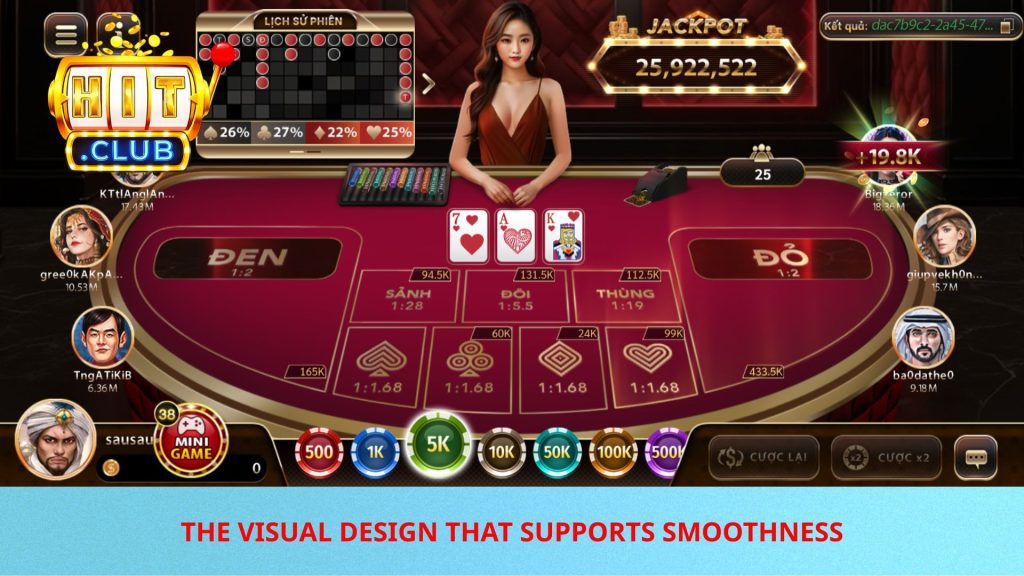
Dark Theme and Information Hierarchy
The dark-themed visual design at Hitclub isn’t purely aesthetic. It serves 2 practical functions that contribute to the smooth experience: it reduces screen brightness during the evening sessions that dominate the portal’s active hours, reducing eye fatigue over extended use; and it creates a visual hierarchy that directs attention toward game content and away from the surrounding interface frame.
Portals with busy, colorful, element-heavy interfaces create visual noise that players have to filter constantly. The Hitclub interface reduces this filtering burden — game options are visually prominent, secondary navigation elements recede into the background, and the overall visual impression is of a portal where the games are the focus rather than the marketing surrounding them.
Feedback Signals That Close Interaction Loops
Smooth interfaces give players confirmation that their actions registered. A tap on a bet option should produce an immediate visual or haptic response. A deposit submission should display a clear confirmation state. A withdrawal request should show an unambiguous success or failure status.
Hitclub’s interface handles these feedback signals consistently. Players don’t experience the uncertainty of having tapped something and not knowing whether it registered — the interface confirms actions immediately, which eliminates the retry behavior (tap again, then again, wondering if the first tap worked) that creates frustrating interaction sequences in portals that don’t close their feedback loops correctly.
Why Interface Smoothness Matters Beyond Aesthetics
An interface that feels smooth does something beyond aesthetics — it removes the portal itself from the player’s attention. A player who isn’t thinking about the interface is thinking about the game. And a player fully engaged with the game is a player having a better experience, returning more frequently, and staying longer per session.
This is why interface quality is a retention factor as much as a first-impression factor. New players notice smoothness during their first sessions and form positive initial impressions. Regular players don’t consciously think about the interface — because it’s gotten out of the way well enough that it doesn’t require thinking about.
Conclusion
The smooth interface at Hitclub is the product of specific, deliberate decisions: fast load sequences prioritized for the player’s path to gameplay, navigation structured for habit rather than deliberate navigation, touch targets sized for the actual devices and use cases of Vietnamese players, transitions that don’t interrupt session flow, and visual design that puts the games front and center rather than the surrounding portal frame. These decisions don’t individually generate excitement — but their combined effect is the feeling that players describe when they say the portal is smooth to use, and that feeling is one of the quieter but more durable reasons the reward gaming portal holds the user base it has.



Facebook comments